
What's included
What Water Mitigation Protects
Mitigation is everything that stops water damage getting worse — before any rebuilding starts.
- Hidden moisture inside walls and floors is found and removed, not just surface water
- Mold growth is less likely when structural drying reaches safe moisture levels
- Documented moisture readings and drying logs support your insurance claim
- Floors, drywall and wood framing are less likely to warp, buckle or rot
- Contaminated water is contained and treated to reduce health risks in your home
- Property value is protected by stopping secondary damage before it spreads
Local expertise
Expert Water Mitigation in Stanwood, WA
Water mitigation is the first line of defense after water enters your home — it stops the damage from spreading before it gets worse.
At TDC Clean & Dry, we serve Stanwood homeowners dealing with burst pipes, appliance overflows, roof leaks and storm-driven flooding. Stanwood sits in Snohomish County, where wet winters and heavy rainfall from October through April push water into crawl spaces, basements and wall cavities.
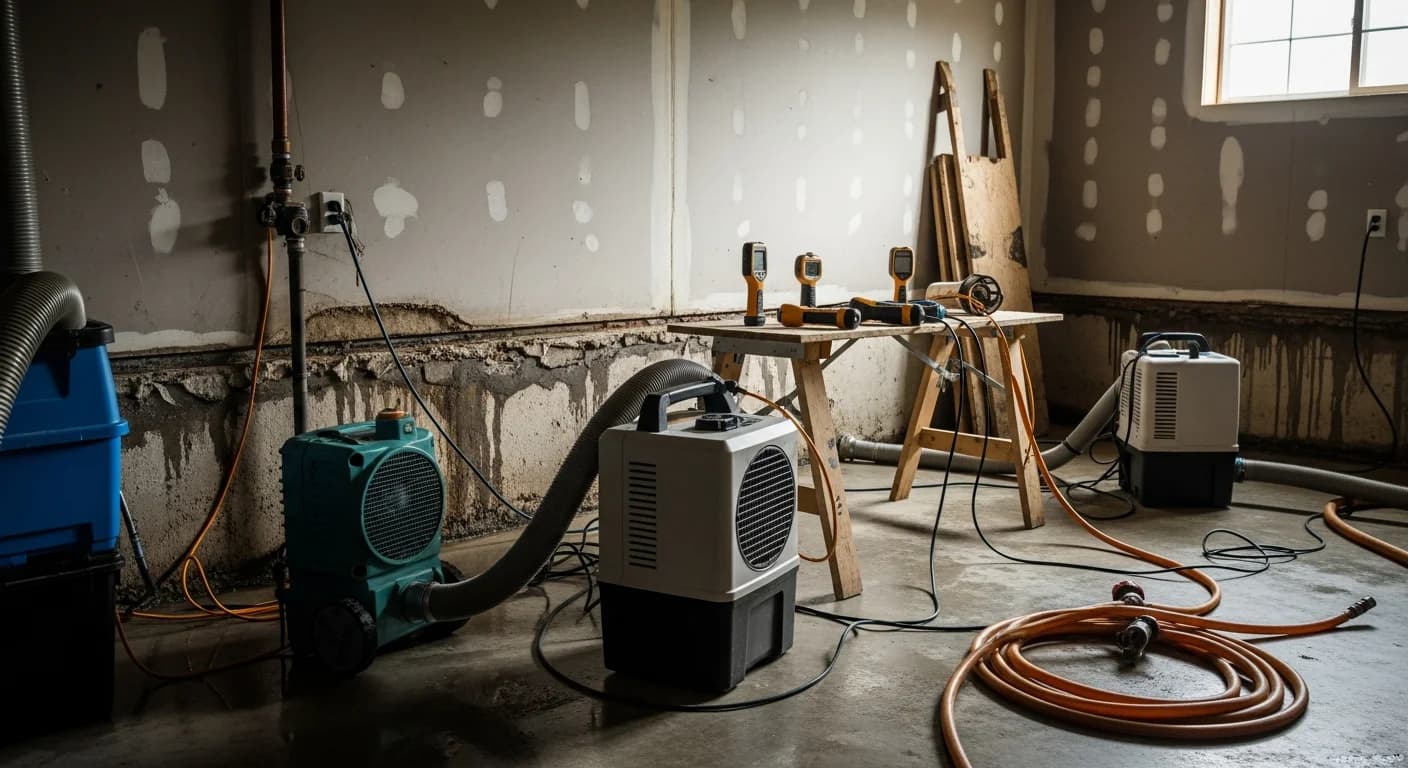
Our process starts with a full moisture inspection using detection equipment to find hidden water. We then extract standing water, set up industrial drying equipment, and monitor moisture levels until materials reach safe, dry readings. Every step is documented to support your insurance claim.
We handle water from clean supply lines, gray water from appliances, and contaminated sources. If your Stanwood home has taken on water, call TDC Clean & Dry to stop the damage and protect your property.
Our process
How Water Mitigation Works
The same five steps on every job, whether it is one wet bathroom or a flooded lower floor.
Call and dispatch
Call (206) 719-4508 at any hour. We ask where the water came from and which rooms are affected, then send a crew with extraction and drying equipment.
Stop the source, make it safe
We confirm the water is shut off, check for electrical hazards, and classify the water as clean, gray or contaminated — which decides how every affected material is handled.
Inspect and map the moisture
Moisture meters and thermal imaging trace water into walls, subfloors and crawl spaces. The damage is photographed and logged before any work starts.
Extract and remove what cannot be saved
Standing water is extracted, and materials that will not dry in place — soaked carpet pad, wicking drywall, wet insulation — are removed so the structure behind them can.
Dry, monitor and sign off
Air movers and dehumidifiers are placed for the space, and readings are taken on every visit until materials reach dry standard. Then the restoration phase can begin.
Common causes
What Puts Stanwood Homes Under Water
Most mitigation calls trace back to a handful of sources — and each one leaves water in different places.
Burst and frozen pipes
A split supply line releases clean water under pressure until it is shut off, soaking wall cavities, ceilings and subfloors far beyond the room where it shows.
Appliance and water heater failures
Washing machine hoses, dishwasher lines, fridge supply lines and water heaters leak slowly or fail all at once — often under flooring where the water spreads unseen.
Roof and window leaks
Months of wet-season rain find every gap in flashing, roofing and window seals, wetting insulation and framing long before a ceiling stain appears.
Crawl space and basement seepage
Saturated soil and overwhelmed drainage push groundwater into crawl spaces and basements, raising humidity throughout the house above.
Water mitigation FAQ
Water Mitigation Questions, Answered
Common questions about water mitigation in Stanwood, WA.
What does water mitigation actually include for a Stanwood home?
Water mitigation covers the inspection, water extraction, structural drying and moisture monitoring needed to stop damage from spreading. It does not include replacing drywall or flooring — that is the restoration phase that follows.
Is water mitigation covered by homeowners insurance in Washington state?
Homeowners insurance typically covers sudden and accidental water damage, such as a burst pipe or appliance overflow. Gradual leaks, or surface flooding from outside, usually require a separate flood policy. Your adjuster makes the final call — we supply the documentation.
How do I know if I need water mitigation or just a basic cleanup?
If water has soaked into walls, flooring or a crawl space in your Stanwood home, professional mitigation is needed. Mopping removes the surface water but not the moisture trapped inside building materials.
Can TDC Clean & Dry handle water damage from Stanwood's heavy winter rains?
Yes. We respond to water intrusion from storm-driven rain, overwhelmed drainage and the roof leaks common in Stanwood during the wet season. We assess each situation and begin extraction and drying based on what the moisture readings show.
What happens if water mitigation is delayed after a pipe bursts?
Delay lets water soak deeper into walls, subfloors and insulation, increasing the risk of mold and structural damage. Acting quickly limits how much material needs to be removed or replaced.
Do I need to be home during the water mitigation process?
You should be present for the initial inspection and for any decisions about removing damaged materials. After that, our technicians return on schedule to check moisture readings and adjust the equipment.
Stop the damage before it spreads.
Every hour water sits in a structure, it travels further into walls, subfloors and insulation. A fast, documented mitigation is the cheapest restoration you will ever pay for.
Mitigation is usually where a water job starts. We also handle emergency water removal, water extraction, structural drying and mold inspection — one crew from the first call to the finished repair.