
What's included
What Structural Drying Protects
Drying the structure, not just the surfaces, is what makes the repairs that follow last.
- Stops hidden moisture in walls, subfloors and insulation before mold takes hold
- Protects wood framing and structural components from warping and rot
- Daily moisture readings give you documented proof that drying is complete
- Reduces the risk of costly material replacement by drying in place when possible
- Lowers indoor humidity to levels that help prevent secondary mold and odor problems
- Supports a smoother insurance claim with moisture mapping and equipment logs
Local expertise
Expert Structural Drying in Stanwood, WA
When water gets into your Stanwood home, visible puddles are only part of the problem.
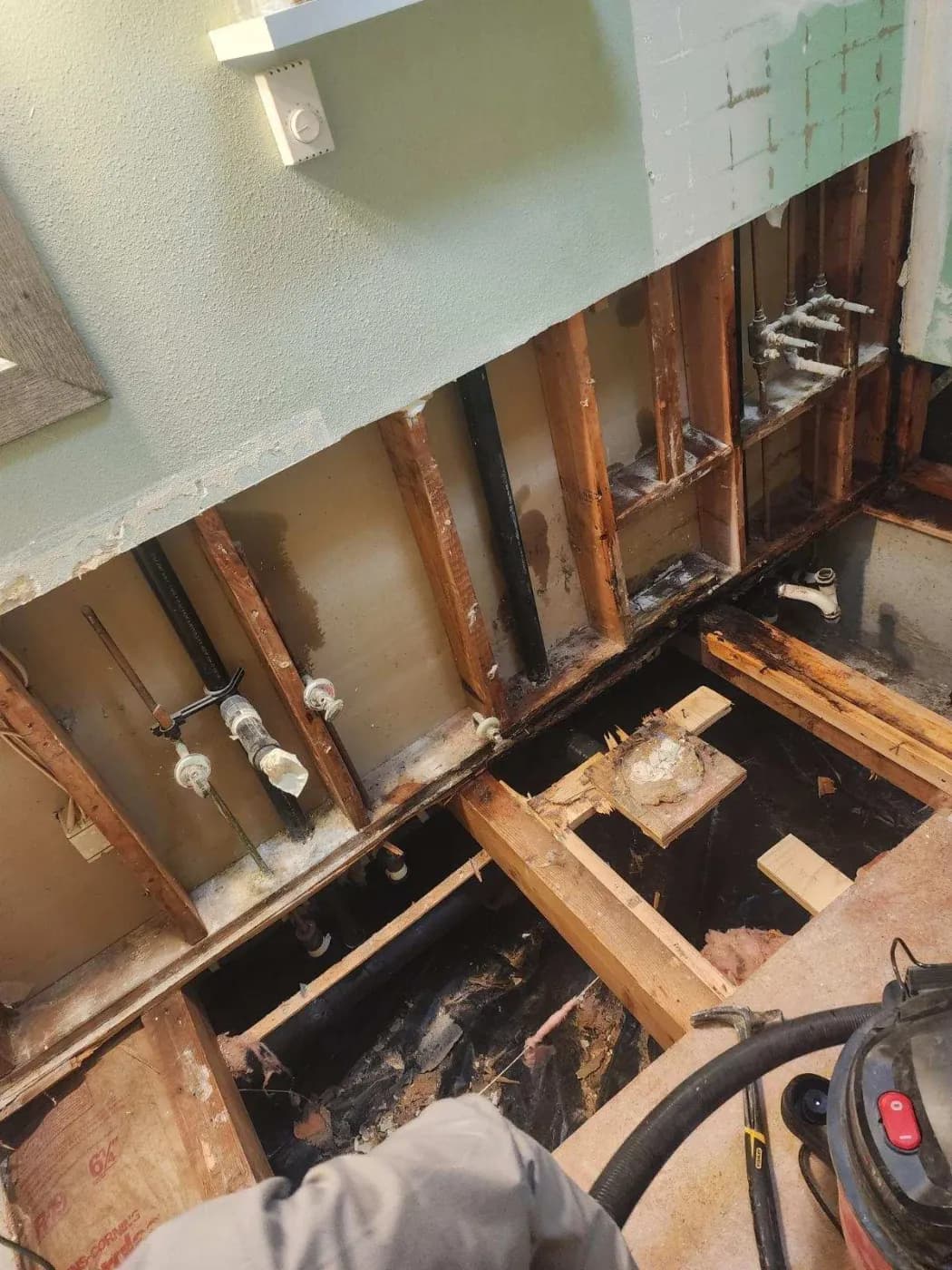
Moisture soaks into drywall, wood framing, subfloors and insulation quickly, and left untreated it leads to mold growth, weakened framing and costly repairs. TDC Clean & Dry uses industrial air movers, dehumidifiers and moisture meters to pull water out of structural materials at every layer — checking wall cavities, studs and sill plates, not just surfaces.
Stanwood's wet winters and high seasonal humidity make thorough structural drying especially important, because moisture sealed inside walls and under floors will not dry out quickly on its own. We take daily moisture readings and adjust equipment placement until the readings confirm every affected material has reached safe levels.
Once the structure is fully dry, repairs can go ahead knowing the problem has been solved at the source. Call TDC Clean & Dry to schedule a structural drying assessment in Stanwood.
Our process
How Structural Drying Works
Drying is measured, not guessed — every decision on the job is based on moisture readings.
Map the moisture
We take readings across floors, walls and ceilings, plus readings from unaffected areas of the house as a dry reference. The results mark exactly where water has traveled and set the goal for the job.
Build the drying plan
The amount and type of wet material set the class of water loss, which decides how many air movers and dehumidifiers the job needs. Baseboards may come off, or small holes be drilled behind them, to vent wall cavities.
Control the air
Air movers sweep moist air off wet surfaces while dehumidifiers pull that moisture out of the room. The space is kept closed and warm, so the equipment works on the structure rather than on damp outdoor air.
Monitor every day
We return daily to take readings from the same marked points, then move, add or remove equipment as materials dry. Every reading and adjustment goes into the drying log for you and your insurance adjuster.
Confirm dry standard
Drying is finished when readings match the dry reference from unaffected materials, not when surfaces feel dry. Then the equipment comes out, and repairs can start on a sound structure.
What we dry
What Gets Dried
Structural drying reaches past the surfaces to the materials the house is built from.
Wall cavities and drywall
Drywall wicks water above the visible waterline, and the insulation behind it holds moisture against the studs. Some walls can be dried in place with air directed into the cavity; others need wet insulation or drywall removed first.
Subfloors and flooring
Water trapped under hardwood, laminate or vinyl soaks the subfloor beneath it. Some flooring can be dried in place; if it has cupped badly or delaminated, it comes up so the subfloor can be dried directly.
Framing and sill plates
Studs, joists and the sill plates that sit on the foundation are the bones of the house. Wood left wet too long can grow mold and eventually rot, so framing is dried and measured until it reaches dry standard.
Crawl spaces
A wet crawl space raises humidity in every room above it. Pooled water is removed first, then dehumidifiers dry the joists and subfloor from below; insulation that has soaked up water is usually removed and replaced.
Structural drying FAQ
Structural Drying Questions, Answered
Common questions about structural drying in Stanwood, WA.
Do I need structural drying even if my floors look dry after a water leak in Stanwood?
Yes. Surfaces can look dry while moisture stays trapped inside walls, subfloors and insulation. Drywall can also wick water above the visible waterline, even when only the bottom edge got wet.
What does TDC Clean & Dry actually do during a structural drying job in Stanwood?
We extract any standing water, then place industrial air movers and dehumidifiers to pull moisture out of structural materials. We take daily moisture readings and adjust the equipment until all affected materials reach safe, dry levels.
Can structural drying prevent mold after water damage in my Stanwood home?
Structural drying removes the moisture mold needs to grow, which is the most direct way to stop it developing. Stanwood's high seasonal humidity makes fast, thorough drying especially important after any water intrusion.
Will structural drying save my floors and walls, or will they need to be replaced?
In many cases, drying materials in place saves floors, walls and framing from full replacement. The outcome depends on how saturated the materials are, the type of water involved and how quickly drying begins.
Does TDC Clean & Dry provide documentation I can use for my insurance claim in Stanwood?
Yes. We document moisture readings, equipment placement and drying progress throughout the job. That record gives your insurance adjuster the detail needed to assess your water damage claim accurately.
What types of water damage events in Stanwood require professional structural drying?
Burst pipes, appliance leaks, storm flooding and roof leaks all commonly require professional structural drying. Stanwood's long rainy season means even a minor roof or foundation leak can saturate structural materials faster than you might expect.
Dry first, then rebuild.
Closing up walls or laying new flooring over damp framing traps moisture where mold can grow unseen. We dry to verified readings first, so whatever is built next goes onto dry framing — and you have the drying logs to prove it.
Drying sits in the middle of a water job. We also handle emergency water removal, water extraction, water mitigation and bathroom remodeling — so the whole job stays with one local crew.