

What's included
What Mold Removal Includes
Removal gets the growth and the materials it has damaged out of your home without spreading spores in the process.
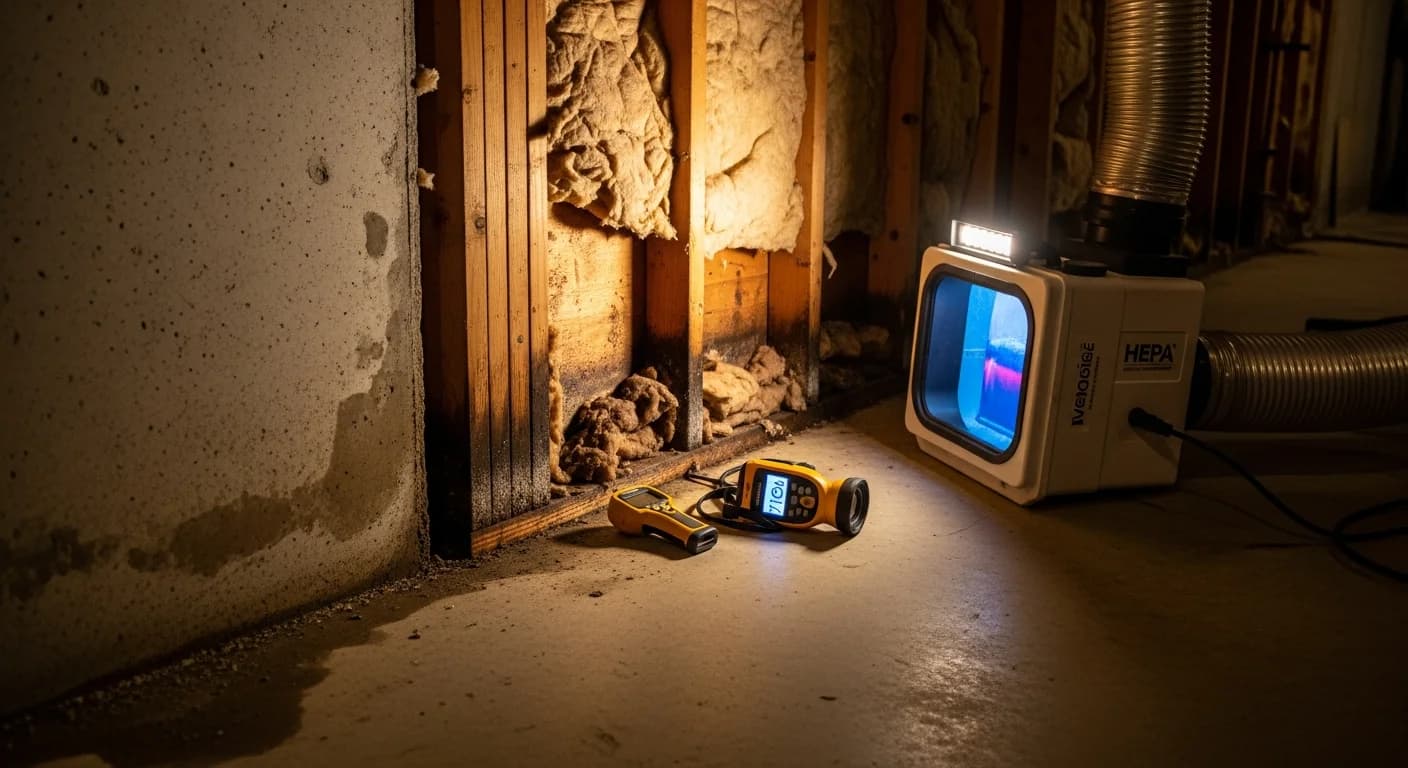
- Hidden mold located with moisture detection tools, not just a visual check
- Containment barriers keep spores from spreading to unaffected rooms
- Contaminated drywall and insulation removed and disposed of safely, with framing cleaned or replaced as needed
- Moisture source identified and addressed to reduce the chance of regrowth
- Indoor air quality improved by removing active mold colonies and cleaning affected surfaces
- Property value protected by resolving mold before it causes deeper damage
Local expertise
Expert Mold Removal in Stanwood, WA
Removal done properly starts with the moisture, not the stains you can see.
Stanwood sits in Snohomish County, where extended rainfall and cool, damp winters keep indoor humidity high for much of the year. That moisture collects in crawl spaces, basements, attics and wall cavities, giving mold what it needs to spread across wood framing, drywall and insulation.
At TDC Clean & Dry, we locate both visible growth and hidden moisture sources before we remove anything. We contain the affected area to keep spores out of clean spaces, then remove contaminated materials, clean the surfaces that remain and dry out residual moisture so mold is far less likely to return.
Stanwood has a mix of newer construction and older homes, and each has its weak spots. Newer builds can trap moisture in poorly ventilated crawl spaces and tight wall cavities, while older homes can have roof and window leaks that go unnoticed for months. Both call for a thorough inspection, not just a surface clean.
Our process
How Mold Removal Works
Removal is the physical work — taking out what cannot be cleaned and cleaning what can, inside a sealed work area.
Seal off the work area
Plastic sheeting closes off the affected area, and doorways and vents are sealed. HEPA air filtration keeps the space under negative pressure, so air flows into the work area rather than out into the house.
Protect the rest of the home
Contents are moved out or covered, the heating and cooling system serving the area is shut off, and technicians wear protective gear. The path from the work area to the exit is covered so debris is not tracked through.
Cut out contaminated materials
Moldy drywall, insulation, carpet pad and other porous materials are cut out, extending past the visible growth. Everything is bagged and sealed inside the containment before it is carried out of the house.
Clean the framing and hard surfaces
Framing, subfloor and other materials that stay are HEPA-vacuumed and cleaned, and stained wood is sanded or scrubbed where needed. The aim is to physically remove the growth, not just cover up the stain.
Dry and final clean
Exposed materials are dried to normal moisture readings before anything is closed up. A final HEPA vacuum and wipe-down clears settled dust, and the containment stays up until the area passes a visual check.
Where mold hides
Where Mold Hides in a Home
Visible spots are often the smallest part of the problem — growth usually starts somewhere out of sight.
Crawl spaces
Joists, beams and the underside of the subfloor stay damp when ground moisture has nowhere to go. Growth there often goes unnoticed until the musty smell reaches the rooms above.
Attics
Roof leaks and warm, moist air rising from the house leave dark staining on roof sheathing and wet insulation. Because attics are rarely visited, growth can spread across a wide area before anyone notices.
Inside walls
Leaking supply lines, drains and window flashing wet the back of the drywall and the insulation inside the cavity. The painted side can look clean while the back of the board is covered in growth.
Under floors and cabinets
Slow leaks from dishwashers, sinks, toilets and washing machines soak into subfloor and cabinet bases, out of sight. Carpet pad and the underside of laminate flooring hold moisture especially well.
Mold removal FAQ
Mold Removal Questions, Answered
Common questions about mold removal in Stanwood, WA.
How do I know if I need professional mold removal in Stanwood?
You likely need professional removal if you see discoloration on walls or ceilings, smell a musty odor or had recent water damage. Mold that covers more than a small patch, or mold hidden behind walls, needs containment and professional equipment to remove safely.
Does TDC Clean & Dry handle mold in crawlspaces and attics?
Yes. We remove mold from crawl spaces, attics and other hard-to-reach areas. These are common problem spots in the Pacific Northwest because moisture builds up where there is little airflow.
Will the mold come back after your removal service in Stanwood?
Mold is unlikely to return once the moisture source is found and fixed, which is why that is part of every job. We locate the root cause — a plumbing leak, a roof leak or poor ventilation — before we finish. Mold spores are always present in the air, so keeping materials dry is what prevents regrowth.
Can mold spread to other rooms in my Stanwood home during removal?
We set up containment barriers before any removal begins to keep spores out of the clean areas of your home. HEPA filtration runs throughout the work to capture airborne spores.
What areas of my home are most likely to have mold in Stanwood, Washington?
Basements, crawl spaces, bathrooms and attics are the most common locations. Stanwood's wet climate keeps these low-airflow spaces damp for long periods, which is exactly what mold needs to grow.
Do I need to leave my home during mold removal in Stanwood?
It depends on the size and location of the affected area. We will walk you through what to expect before work begins so you can make the right call for your household.
Remove it the right way.
Wiping away visible mold leaves growth inside porous materials and the moisture behind the wall untouched. Contained removal takes out what cannot be cleaned, cleans what can and deals with the water that started it — the parts a surface clean misses.
Removal is one part of the job. We also offer mold inspection, mold testing, mold remediation and structural drying — one crew from the first look to the rebuild.