

What's included
What Mold Mitigation Protects
Mitigation keeps an active mold problem from getting worse while the moisture behind it is dealt with.
- Hidden mold sources behind walls and under floors are found and addressed, not just surface growth
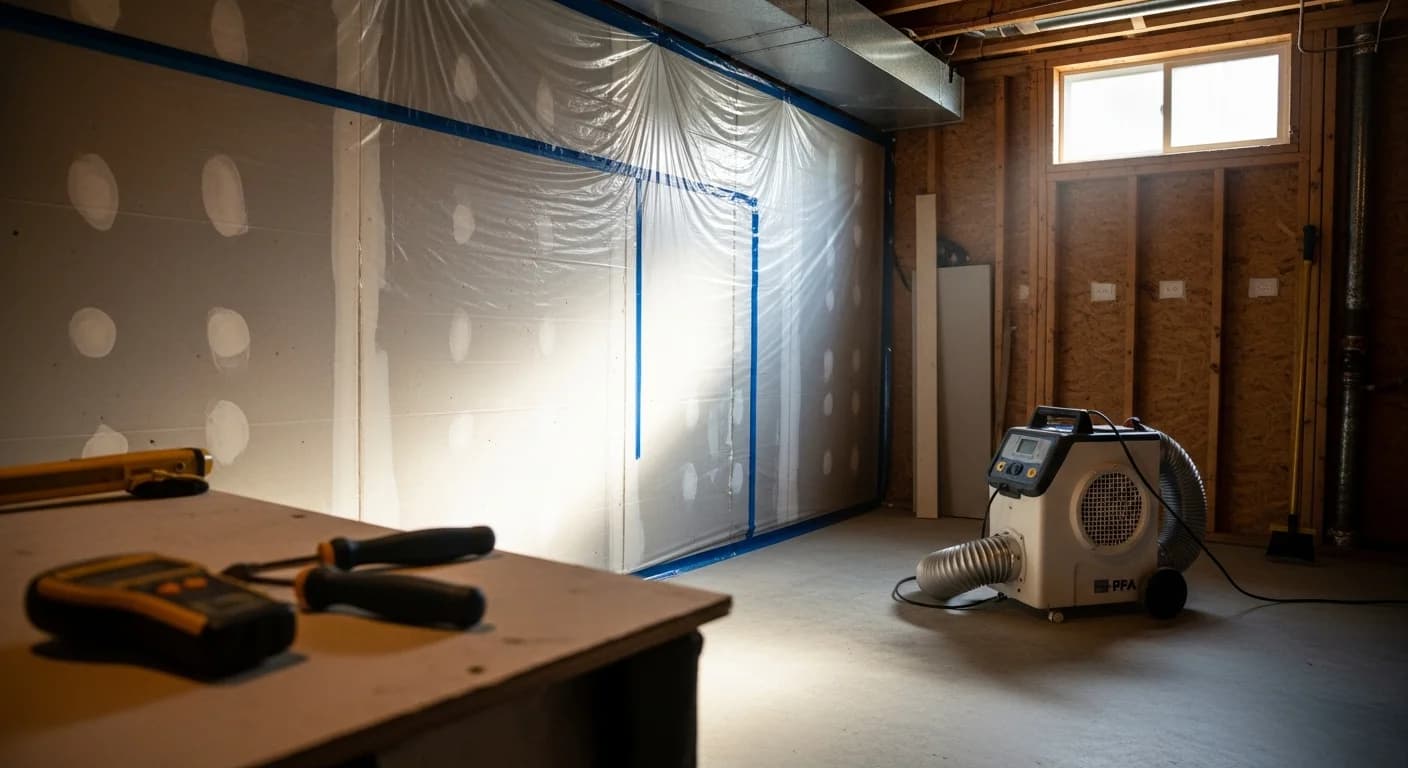
- Containment barriers keep spores from spreading to unaffected rooms during the work
- Damaged drywall, insulation and subfloor materials are removed to protect the structural framing
- HEPA air filtration captures airborne spores, improving indoor air quality once the work is done
- Identifying the moisture source reduces the chance of mold returning after mitigation
- Stopping active mold growth helps protect your home's resale value
Local expertise
Expert Mold Mitigation in Stanwood, WA
In a climate this damp, mold mitigation is as much about controlling moisture as it is about removing growth.
Stanwood has a marine climate, with a long wet season that runs roughly from October through April. Those months push moisture into crawl spaces, attics, basements and wall cavities, where mold can take hold quickly.
At TDC Clean & Dry, we locate both visible growth and the hidden moisture feeding it using moisture meters and a careful inspection, and we address that moisture source first. We then contain the affected area to keep spores out of clean spaces, safely remove damaged porous materials like drywall and insulation, and run HEPA air filtration throughout the work to capture airborne spores.
We help Stanwood homeowners with mold after water damage, plumbing leaks, roof leaks and poor ventilation. If you see discoloration, smell a musty odor or had recent water damage, call TDC Clean & Dry to schedule a mold assessment.
Our process
How Mold Mitigation Works
Mitigation stabilizes the problem: it cuts off the moisture, limits the spread and gets the affected area dry.
Find the moisture source
Mold only grows where there is moisture, so that is where we start. Moisture meters and a visual inspection trace the leak, condensation or damp crawl space feeding the growth and show how far the wet materials extend.
Stop the water
The source is addressed as early as possible — a leak stopped, ventilation improved or dehumidifiers set up where humidity is the problem. Without that step, anything cleaned or removed can simply grow back.
Isolate the affected area
Plastic sheeting seals the area off from the rest of the house, and HEPA air filtration keeps it under negative pressure. Spores disturbed during the work stay inside the containment instead of drifting into clean rooms.
Remove what cannot be saved
Drywall, insulation or subfloor that is soaked or heavily colonized is cut out, bagged and taken away. That removes the worst of the growth and lets air reach the framing behind it so it can dry.
Dry out and stabilize
Dehumidification inside the containment brings the remaining materials down to dry readings, confirmed with a moisture meter. With the spread stopped and the area dry, final cleaning and repairs can go ahead.
Common causes
Why Mold Keeps Coming Back
Mold that returns after a cleanup is usually a sign the moisture behind it was never solved.
A slow leak nobody found
A dripping supply line, a failed toilet seal or a seeping shower pan can keep a wall or subfloor wet for months. Clean the mold without fixing the leak and it grows right back.
Attic condensation
Through the winter, warm, moist air from the living space condenses on cold roof sheathing — especially where bath fans vent into the attic or ventilation is blocked. The result is dark staining across the underside of the roof deck.
Damp crawl spaces
Wet ground, torn or missing vapor barriers and poor drainage keep crawl spaces humid for much of the year. That moisture feeds growth on joists and subfloor, and air rising from below can carry the musty smell upstairs.
Rooms that cannot breathe
Bathrooms without working exhaust fans, laundry rooms, closets on exterior walls and furniture pushed against cold walls all trap humid air. Condensation collects on the coldest surfaces, and mold follows.
Mold mitigation FAQ
Mold Mitigation Questions, Answered
Common questions about mold mitigation in Stanwood, WA.
How do I know if I need professional mold mitigation in Stanwood?
You likely need professional help if you see mold spots, smell a persistent musty odor or had recent water damage. Mold covering more than about 10 square feet, or growing in hidden spaces like crawl spaces and wall cavities, should be handled with professional containment and equipment.
Does mold mitigation fix the moisture problem that caused the mold?
Yes. Finding and addressing the moisture source is a core part of mitigation. Without fixing the leak, ventilation gap or humidity problem, mold can return even after a thorough cleanup.
Can mold grow in my Stanwood home even without a visible leak?
Yes. Stanwood's damp winters and high humidity can supply enough moisture for mold to grow without an obvious leak. Crawl spaces, attics and poorly ventilated rooms are common spots where condensation alone can feed growth.
Will the mold mitigation process spread spores to other parts of my home?
Containment is there to prevent exactly that. Barriers and HEPA air filtration are set up before any mold is disturbed, keeping spores confined to the work area so the rest of your home stays protected.
What areas of a home does TDC Clean & Dry typically treat for mold in Stanwood?
We treat crawl spaces, attics, basements, bathrooms, kitchens and wall cavities — the most common places for mold in local homes. We also check HVAC areas and subfloors, where moisture and poor airflow combine.
Is mold behind my walls a serious problem for my Stanwood property?
It can be. Mold inside a wall cavity means moisture is reaching the structure, and over time that moisture can damage framing and insulation while spores reach your living space. Catching it early protects both the structure and the air inside.
Contain it before it spreads.
Mold keeps growing for as long as the moisture behind it lasts, and the longer it grows, the more material has to come out. Containing it early and fixing the source keeps the job smaller and more of your home intact.
Mitigation is often where a mold job starts. We also handle mold inspection, mold removal, mold remediation and water mitigation — one crew from the first reading to the finished repair.