

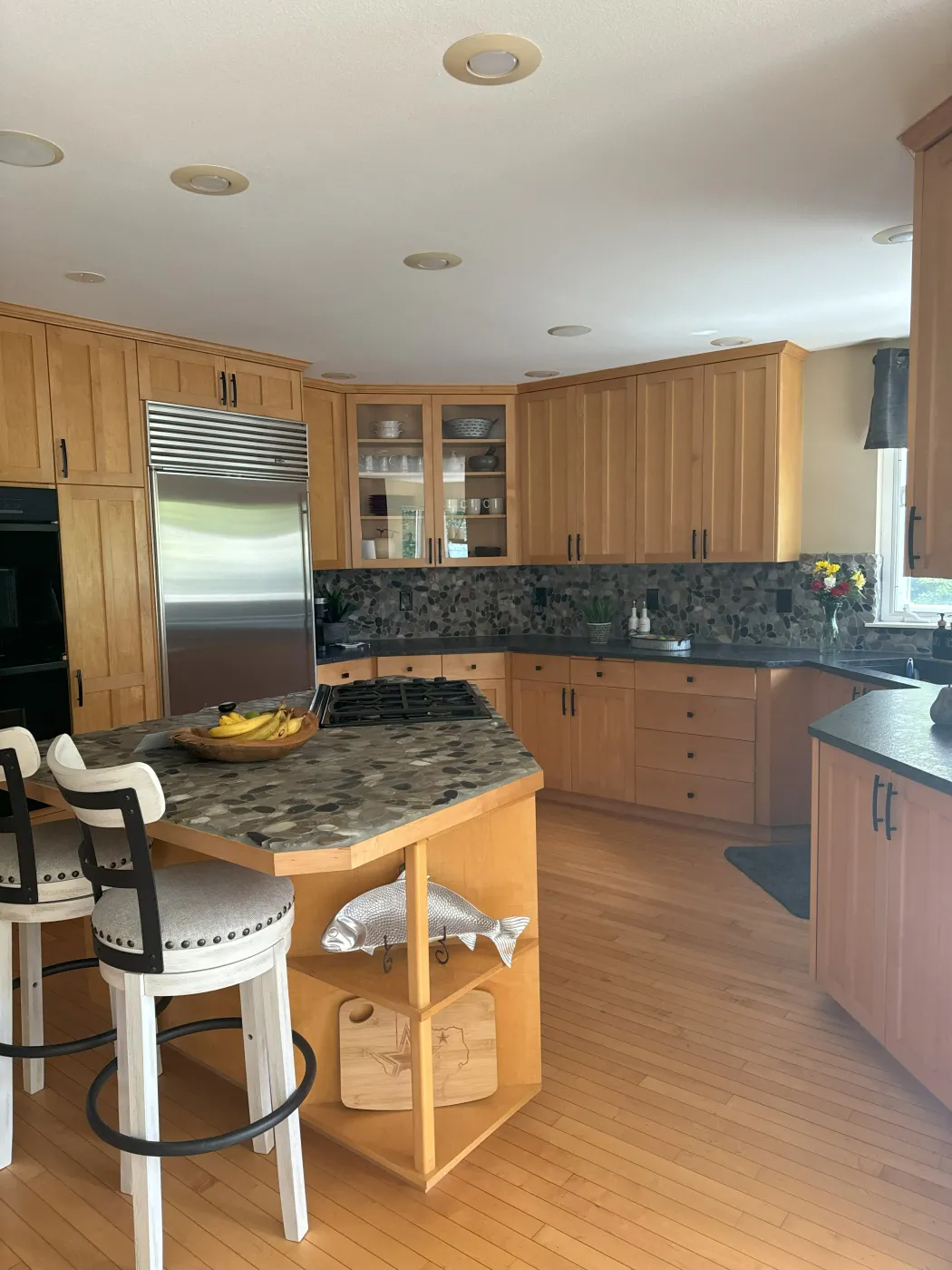
What's included
What Our Kitchen Countertop Installation Includes
New countertops change how a kitchen looks and works. Getting them right starts below the surface.
- Removal and disposal of the old countertops and backsplash
- A check of the sink base, dishwasher opening and cabinet boxes for water damage
- Cabinets leveled and reinforced where needed to carry the new tops
- Templating, fabrication and installation, including sink and cooktop cutouts
- The sink, faucet, disposal and dishwasher reconnected and tested
Local expertise
Countertop Replacement for Stanwood Kitchens
Many Stanwood kitchens still have the countertops they were built with.
The median home in Stanwood was built in 2001, based on U.S. Census data, and nearly half went up between 1990 and 2009. Kitchens from that period often came with laminate or tile countertops. Laminate edges chip and peel, and tile counters trap grime in the grout lines. Both tend to look dated long before the cabinets wear out.
Replacing the tops is a good time to look underneath them. The sink base and the space around the dishwasher are where kitchen leaks usually start. A dripping trap or a failed dishwasher hose can soak the cabinet floor and subfloor for years. We repair water damage for a living, so we check those spots when the old counters come off and fix what we find first.
The new material depends on how you cook and how much upkeep you want. Stone and quartz are heavy, so the cabinets under them must be level, square and solid. We check that before templating, because a countertop is only as flat as the cabinets holding it. That step prevents cracked slabs, uneven seams and drawers that rub.
Our process
How Kitchen Countertop Installation Works
Five steps from picking a material to cooking on the new surface.
Measure and choose the material
We measure the counters, note the sink and cooktop locations and talk about how you use the kitchen. Then we compare materials by durability, maintenance and budget. You get a written estimate before anything is ordered.
Remove the old tops and inspect
We disconnect the sink and appliances and remove the old countertops. The sink base, dishwasher opening and cabinet boxes get checked for leaks, rot and mold. Damaged areas are repaired before the new tops are measured.
Level the cabinets and template
Cabinets are shimmed level and reinforced where the new material needs it. Stone and quartz tops are then templated to the exact cabinet layout. The template sets every edge, seam and cutout.
Fabricate and install
The tops are cut to the template, including the sink and cooktop openings. On installation day, they are set, seamed and secured to the cabinets. Undermount sinks are attached and sealed during this step.
Reconnect, seal and walk through
We reconnect the faucet, drain, disposal and dishwasher, then check every connection for leaks. Natural stone gets sealed if the material calls for it. A final walkthrough covers care and cleaning for your new surface.
Countertop materials
Countertop Materials We Install
Each material has its own strengths. We help you match one to your cooking habits and budget.
Quartz
Engineered quartz is non-porous, so it resists stains and never needs sealing. It comes in a wide range of colors and patterns. Direct heat can damage it, so trivets are a must.
Granite and natural stone
Granite handles heat well, and every slab is unique. It needs periodic sealing to resist stains. Its weight means the cabinets below must be solid and level.
Butcher block
Wood counters bring warmth to a kitchen and work well on islands. They need regular oiling and should stay away from standing water. Scratches and stains can be sanded out.
Laminate and solid surface
Modern laminate is affordable and comes in convincing stone and wood looks. Solid-surface tops can take an integrated sink with no seam to trap grime. Both install faster than stone.
Countertop FAQ
Kitchen Countertop Installation Questions, Answered
Common questions about kitchen countertop installation in Stanwood, WA.
How long does countertop installation take?
Stone and quartz tops are templated first, then fabricated, which often takes one to two weeks. Installation itself usually takes a day. Laminate and prefabricated tops can move faster.
Can I keep using my kitchen while the new countertops are made?
Usually, yes. In many cases the old tops stay in place until installation day. If they must come off first for templating, we talk through temporary options so you are not left without a sink for long.
Can you install new countertops on my existing cabinets?
Often. We check that the cabinets are level, square and sturdy enough for the new material. Weak or water-damaged boxes may need repair or reinforcement first, and we tell you before templating.
Which countertop material is easiest to maintain?
Quartz needs the least care because it is non-porous and never needs sealing. Laminate and solid surface are also low-maintenance. Granite and butcher block need periodic sealing or oiling.
Can I switch to an undermount sink?
Yes, with quartz, granite or solid-surface tops. The sink is attached beneath the counter during installation, which makes wiping crumbs into it easy. Laminate usually works best with a drop-in sink.
What if you find water damage under my old countertops?
We show you what we found and explain the repair. Leaks around sinks and dishwashers often damage cabinet floors and subfloors. We fix that before the new tops go on, and we can document it if insurance applies.
Countertops set on solid, dry cabinets.
We handle removal, repairs, templating and installation with one point of contact from start to finish. Flexible financing is offered through Enhancify, and 0% interest options may be available.
Updating more of the kitchen? We also handle kitchen cabinet installation, kitchen backsplash installation and kitchen remodeling for Stanwood homes.