
What's included
What Our Drywall Repair Service Includes
A patch should be invisible once it is painted. Getting there takes several careful layers.
- An inspection of the damage, with a moisture check wherever water may be involved
- Damaged drywall cut back cleanly to sound material or framing
- New drywall hung and fastened, with tape and joint compound applied in thin coats
- Sanding and texture matched to the surrounding wall or ceiling
- Primer and paint to blend the repair, if you want it finished
Local expertise
Drywall Repair in Stanwood Homes
Most drywall damage is cosmetic. The damage worth worrying about usually involves water.
Everyday damage is simple to fix: a doorknob hole, a torn anchor, a crack above a door or a row of nail pops. Houses expand and contract with the seasons, and small cracks at corners and seams are normal. We patch, tape and texture these so the wall looks untouched once painted.
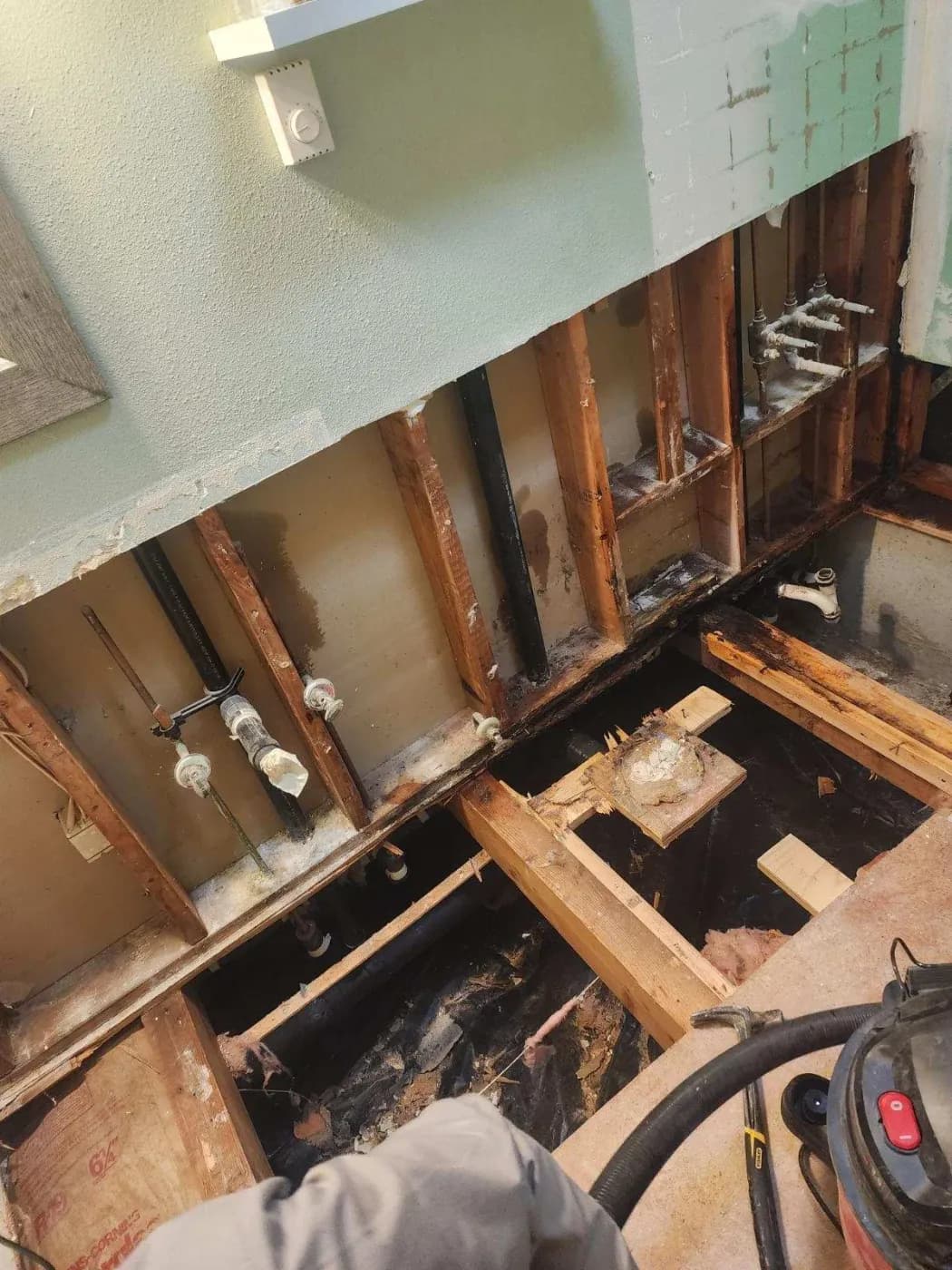
Water-damaged drywall is different. Drywall soaks up water like a sponge, and once it is wet, it loses strength and can grow mold inside the wall cavity. A sagging ceiling, a soft spot or a stain that keeps spreading all need more than a patch. As a water damage company, we find the source, cut out the wet material and dry the framing before new drywall goes up.
Older ceilings need a check before we cut. Textured ceilings from past decades can contain asbestos, and about 18 percent of Stanwood's homes were built before 1980, according to U.S. Census data. In Snohomish County, the Puget Sound Clean Air Agency sets asbestos survey rules for renovation work. We check the age of the material and arrange testing when it is needed.
Our process
How Drywall Repair Works
Five steps from finding the damage to a wall you cannot tell was repaired.
Inspect and find the cause
We look at the damage and check for moisture with a meter. A crack from settling needs a different fix than a stain from a leak. You get a clear explanation and a written estimate.
Cut out the damaged section
Damaged drywall is cut back to a clean edge, or to the studs for larger repairs. Water-damaged drywall is removed past the wet area. Wet insulation comes out too.
Dry and repair behind the wall
When water is involved, the framing is dried to normal moisture levels before anything closes up. We treat mold if we find it and replace the insulation. Closing a wet wall only traps the problem.
Hang, tape and finish
New drywall is fastened to the framing, taped and covered with thin coats of joint compound. Each coat dries and is sanded before the next. Thin coats keep the patch flat and invisible.
Texture, prime and paint
We match the existing texture, whether smooth, orange peel or knockdown. The repair is primed so it absorbs paint evenly. Then it is painted to blend with the rest of the wall.
What we repair
Drywall Repairs We Handle
From a single hole to a full ceiling, each repair gets the right method for the damage.
Holes and dents
Small holes are filled and sanded. Larger holes get a new piece of drywall set into the wall and taped. Either way, the patch is textured to match.
Cracks, nail pops and loose tape
Cracks at corners and seams are retaped so they do not come back. Popped nails are reset with screws and covered. Peeling tape is cut out and replaced.
Water-damaged walls and ceilings
Wet, stained or sagging drywall is removed and the cavity is dried before replacement. When a sudden leak caused the damage, we document it for your insurance claim.
Texture matching and finishing
Orange peel, knockdown and smooth walls each need their own technique. We match the pattern so the repair does not stand out under light. Walls hit by strong side light can get a smoother, higher-grade finish.
Drywall repair FAQ
Drywall Repair Questions, Answered
Common questions about drywall repair in Stanwood, WA.
How long does drywall repair take?
Small repairs often take a few days, because each coat of joint compound needs time to dry. Water-damaged areas take longer, since the framing must dry before new drywall goes up.
Can you match my wall texture?
Yes. We match common textures such as orange peel, knockdown and smooth finishes. Painting the whole wall afterward helps the repair blend completely.
Can wet drywall be dried instead of replaced?
Sometimes. Drywall that got briefly wet from a clean water source can often be dried in place. Drywall that is soaked, sagging, moldy or touched by dirty water should be replaced.
Are cracks in my drywall a sign of a bigger problem?
Usually not. Small cracks at corners and above doors often come from normal seasonal movement. Wide or growing cracks, or doors that start sticking, are worth having checked.
Does insurance cover water-damaged drywall?
Often, when the damage came from a sudden leak such as a burst pipe. Gradual leaks and floods are handled differently. We document the damage and can bill your insurer directly when a claim applies.
Do you paint after repairing the drywall?
Yes. We prime and paint the repair to blend with the wall. For the best match, we often recommend painting the whole wall or ceiling.
Repairs you cannot see once they are done.
We fix the cause, repair the wall and finish it to match, with one crew from start to finish. Flexible financing is offered through Enhancify, and 0% interest options may be available.
Drywall damage often calls for interior painting, structural drying and mold removal as well.