

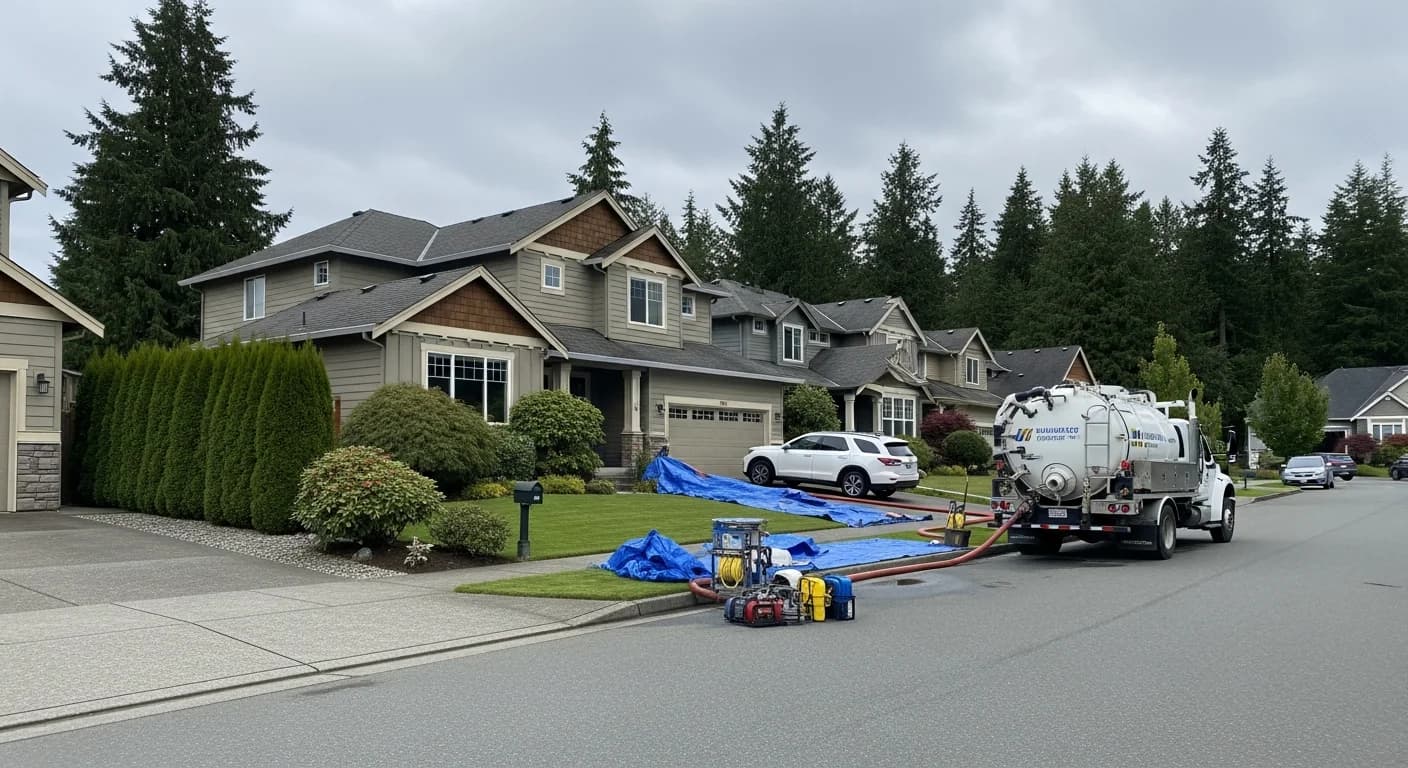
Mold Inspection · Arlington, WA
Mold Inspection in Arlington, WA — Find It Before It Spreads
Maybe you are closing on a house, or the basement has smelled off since the river came up. Either way, you want to know what is behind the walls before you spend money. TDC Clean & Dry inspects Arlington homes for mold from our Stanwood base, and we show you what we find.
Local conditions
Where hidden mold hides in Arlington houses.
Most mold in an Arlington home is not on a wall you walk past every day. It grows where water collects and nobody looks: under the floor, above the ceiling and inside exterior walls. An inspection is how you find it before it spreads into the rooms you use.
Arlington's housing makes the search predictable. The median home here was built in 1996, and roughly six in ten went up between 1990 and 2009. Homes of that age commonly have vented crawl spaces, attic bath fan runs and window flashing that is now three decades old.
The weather supplies the water. Arlington's NOAA station records about 49 inches of precipitation a year, most of it between October and March. Long wet stretches give slow leaks time to feed growth you cannot see from inside.
The river adds a second trigger. When the Stillaguamish topped 21 feet at Arlington in December 2023, valley crawl spaces and garages took on water. Anyone who had water in a lower level that winter should have those spaces checked.
Home sales are a third reason to inspect. Crawl spaces and attics rarely get a close look during a quick showing. An inspection before listing or closing gives buyers and sellers time to deal with anything it finds.
The local data
What an Arlington inspection is up against.
An inspection is only as good as the places it reaches. These numbers show why ours spends time in crawl spaces and attics, not just living areas.
- Median year built for Arlington homes, the era of vented crawl spaces1
- 1996
- Share of Arlington homes built between 1990 and 20091
- 59%
- Average yearly precipitation at Arlington's NOAA station2
- 49 in
- Stillaguamish crest at Arlington in December 2023, over a 14 ft flood stage3
- 21.34 ft
Most of the growth we look for sits in spaces built during those two decades.1 Add a wet season and a flood-prone valley, and the unseen corners of a house deserve a real look. EPA also warns against running an HVAC system you suspect is contaminated.4 Checking the ductwork area is part of the visit for that reason.
Highest: 1990s at 2,501 homes. Lowest: 2020+ at 183 homes.
View data table
| Month | homes |
|---|---|
| Pre-1940 | 358 |
| 1940s | 221 |
| 1950s | 325 |
| 1960s | 248 |
| 1970s | 688 |
| 1980s | 845 |
| 1990s | 2,501 |
| 2000s | 2,321 |
| 2010s | 540 |
| 2020+ | 183 |
Sources
- 1. U.S. Census Bureau, American Community Survey 5-year estimates, Arlington city, WA (2024)
- 2. NOAA NCEI, U.S. Climate Normals, Arlington, WA (station USC00450257) (1991–2020 normals)
- 3. National Weather Service gauge ARLW1 and Snohomish County Emergency Management, as reported by KOMO News, FOX 13 Seattle and the Lynnwood Times (2023 and 2025)
- 4. U.S. EPA, A Brief Guide to Mold, Moisture and Your Home (current guidance)
Buying, selling or just suspicious?
A mold inspection answers the question before it turns into a bigger bill. We walk the whole house with you and point out anything that needs attention.
Our process
How we inspect an Arlington home.
A good inspection follows the water, room by room and then below and above them. Here is what the visit looks like from arrival to report.
- 01
A walk-through that starts with your story
We drive about 22 minutes from Stanwood to central Arlington, then start by listening. When did the smell start, did water come in during a flood, and which rooms bother you most?
- 02
Meters and thermal imaging on every suspect wall
Moisture meters check drywall, subfloors and framing for water you cannot see. Thermal imaging flags cool, damp patches behind finished surfaces, which is common on the north walls of older Old Town houses.
- 03
Down into the crawl space
In a 1990s or 2000s Arlington home, the crawl space gets a full pass with a light and a meter. We check insulation, the ground cover, vents and the wood above for staining or growth.
- 04
Up into the attic
Next we look at roof sheathing, nail tips and bath fan runs for signs of trapped moisture. Larger homes near Gleneagle often have several fans, so each run is traced to see where it vents.
- 05
Findings you can act on
You get a plain explanation of what we found, where the moisture comes from and what it would take to fix. If lab samples would help, we explain when mold testing is worth adding.
Warning signs
Reasons to book a mold inspection in Arlington.
You do not need to see mold to justify an inspection. These situations are the most common reasons Arlington homeowners should get one.
You are buying a home built in the 1990s or 2000s
That describes most of Arlington's housing, and those crawl spaces and attics rarely get checked closely during a sale. An inspection before closing tells you what you are inheriting.
Water reached your lower level during a flood
If Stillaguamish floodwater touched your crawl space, garage or basement, damage can hide for months. Floodwater may carry bacteria and chemicals, which raises the stakes for any growth.
A musty smell with no visible cause
Odor usually means growth somewhere out of sight, often under flooring or inside a wall. An inspection finds the source instead of covering the smell with air fresheners.
Condensation or dark stains on windows and ceilings
Persistent window condensation and ceiling spots in winter point to humidity above safe levels. EPA recommends keeping indoor humidity below 60 percent to limit mold growth.
A leak was fixed but never dried out
A repaired pipe or roof can leave wet insulation and framing behind. If nobody measured moisture afterward, it is worth checking before mold takes hold.
Why us
Why Arlington homeowners trust our inspections.
An inspection should give you facts, not a sales pitch. These are the ways ours stays useful to Arlington homeowners.
Free inspections across Arlington
Our on-site inspection costs nothing, so there is no reason to guess about a smell or a stain. You decide what happens next only after you see what we found.
IICRC-certified eyes from nearby Stanwood
Certified technicians handle every inspection, and they come from Stanwood, about 22 minutes away. That makes return visits after a repair easy to schedule.
Crawl space and attic checks as standard
Given how many Arlington homes date from 1990 to 2009, we treat those spaces as part of every visit. Skipping them is how hidden mold gets missed.
Answers that work for sales and claims
Photos and moisture readings back up everything we report. That record helps during a home sale or an insurance claim after a flood.
Around Arlington
Inspections in every Arlington neighborhood.
Each part of Arlington has its own likely trouble spots. We adjust where we look based on the house and the ground it sits on.
Old Town
Early homes near Olympic Avenue can have plaster walls that hide moisture well. We pay close attention to exterior walls, window framing and any basement.
Gleneagle
Homes around the golf course tend to be larger, with big attics and multiple bathrooms. Attic moisture from bath fans is the first thing we check here.
Kent Prairie
Level ground south of Old Town means many homes sit over crawl spaces. We look for damp insulation and staining on the floor framing above.
Smokey Point
The I-5 and State Route 531 area mixes businesses with homes. We inspect storefronts and offices as well, where a slow leak can go unnoticed behind finishes.
Arlington Heights
Valley properties east of town saw floodwater in December 2023. Crawl spaces and outbuildings that got wet then deserve a careful look now.
Arlington FAQ
Mold Inspection questions in Arlington, WA
Straight answers to the questions Arlington homeowners ask most about mold inspection. If yours is not covered here, call and ask the crew directly.
How much does a mold inspection cost in Arlington?
Our on-site inspection is free. If lab testing would add useful information, we explain why and what it involves before anything is scheduled.
What is the difference between a mold inspection and mold testing?
An inspection finds moisture and visible growth with meters, thermal imaging and a careful look. Testing sends air or surface samples to a lab to identify what is present and how much.
Should I get a mold inspection before buying a house in Arlington?
It is a smart step, especially for homes built from 1990 to 2009, which make up most of Arlington's housing. Crawl spaces and attics are easy to miss during a standard walk-through.
How long does an inspection take?
It depends on the size of the home and how easy the crawl space and attic are to reach. We walk you through the findings before we leave, so you are not waiting on a report to learn the basics.
What happens if you find mold?
We show you where it is, explain the moisture behind it and give you a written scope for fixing it. Small patches may be something you can handle yourself, and we will say so.
Do you inspect commercial buildings in Arlington?
Yes. Offices, shops and rentals get the same moisture-first inspection as a house. That includes crawl spaces, attics and mechanical rooms where leaks start.
Reviews
What local homeowners say.
Real reviews from real clients on our Google Business Profile — unedited.
Get help now
Know what is behind your Arlington walls.
Call (206) 719-4508 or book online for a free mold inspection. We will check the hidden spaces and tell you plainly what we find.
(206) 719-450824/7 emergency line · Monday – Sunday 8:00 am – 4:00 pm · Free inspections
Schedule a Free Inspection
Tell us what is going on and we will get back to you as soon as possible. If water is coming in right now, call instead — it's faster.