

What's included
What Full Remediation Covers
Remediation brings containment, removal, moisture control and air filtration together into one complete job.
- Hidden mold behind walls and under floors is found and removed, not just surface-cleaned
- Containment barriers keep spores from spreading to unaffected rooms during the work
- The moisture source is identified and addressed so mold is less likely to grow back in the same spot
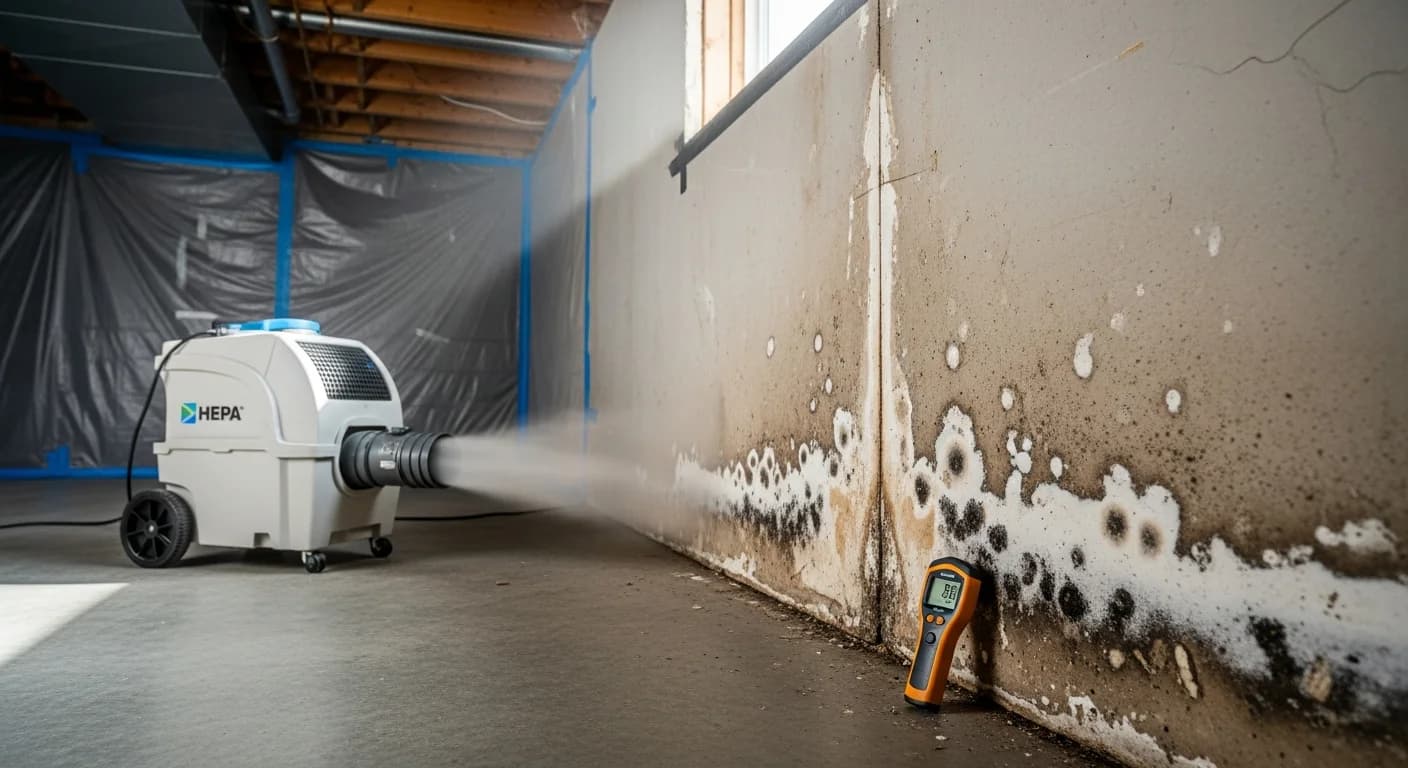
- HEPA air filtration removes airborne spores, improving indoor air quality after the job
- Damaged porous materials like drywall and insulation are properly removed and disposed of
- Your home's wood framing is protected from ongoing mold and moisture damage
Local expertise
Expert Mold Remediation in Stanwood, WA
Remediation treats mold as a moisture problem first and a cleaning job second.
Wet winters, high humidity and months of steady rain feed moisture into basements, crawl spaces, attics and wall cavities across Stanwood. Those conditions make mold growth a recurring problem in local homes.
At TDC Clean & Dry, we locate both visible and hidden mold using moisture detection tools and trace the moisture source so it can be fixed first. We contain the affected area to keep spores out of clean spaces, then remove contaminated materials, clean the surfaces that remain and use HEPA air filtration to clear airborne spores.
This matters because mold and the moisture behind it damage wood framing, drywall and insulation over time, and mold affects indoor air quality for the people living in the home. If you see dark spots on walls, smell a musty odor or had recent water damage, contact TDC Clean & Dry to schedule a mold assessment.
Our process
How Mold Remediation Works
Remediation is the full protocol, from finding the moisture to verifying the space is clean — nothing is rebuilt until it passes.
Assess and set the scope
An inspection and moisture mapping — plus lab testing when the situation calls for it — show how far the growth extends. That sets the scope: what comes out, how the area is contained and how the result will be checked.
Correct the moisture source
The leak, condensation or ventilation problem behind the growth is corrected as early in the job as possible. Wet materials that will stay are dried, because mold removed from a structure that is still wet can come right back.
Contain and filter the air
The work area is sealed with plastic sheeting and kept under negative pressure with HEPA air filtration. Spores disturbed during removal are captured instead of spreading through the rest of the house.
Remove and clean
Contaminated porous materials such as drywall, insulation and carpet pad are removed and bagged. Framing and hard surfaces that stay are HEPA-vacuumed and cleaned until no visible growth or mold dust remains.
Verify, then rebuild
Before containment comes down, the area gets a final visual inspection and moisture check, with clearance air sampling where appropriate. Once the space passes, repairs and rebuilding can begin.
When it is needed
When a Job Calls for Full Remediation
A small patch on bathroom grout can be a household job, but these situations call for the full protocol.
More than a small patch
Growth covering more than about 10 square feet — roughly a 3-by-3-foot area — is generally beyond a household cleanup. At that size, containment and air filtration are needed to keep spores out of the rest of the home.
Growth inside the structure
Mold inside walls, ceilings, subfloors or the crawl space cannot be judged from the outside. Remediation opens the area up under containment, so the full extent is found and removed rather than guessed at.
Contaminated water was involved
When mold follows a sewage backup or floodwater, the affected materials can carry bacteria as well as mold. That calls for professional cleanup, protective gear and removal of the porous materials the water touched.
Sensitive people in the home
Mold can trigger allergy and asthma symptoms in sensitive people. If someone in the household has allergies, asthma or another respiratory condition, the extra containment and verified clearance of full remediation are worth it.
Mold remediation FAQ
Mold Remediation Questions, Answered
Common questions about mold remediation in Stanwood, WA.
How do I know if I need professional mold remediation in my Stanwood home?
You likely need professional help if you see dark spots on walls or ceilings, smell a musty odor or had recent water damage. Small surface patches may be manageable on your own, but hidden or widespread mold calls for a trained crew with proper equipment.
Does mold remediation fix the moisture problem that caused the mold?
Yes. Finding and addressing the moisture source is a core part of remediation. Without fixing it — a plumbing leak or poor crawl space ventilation, for example — mold can return to the same area of your home.
Can mold grow inside walls where I cannot see it in my Stanwood house?
Yes. Mold commonly grows inside wall cavities, under floors and in attics, where moisture collects out of sight. TDC Clean & Dry uses moisture detection tools to track down hidden moisture and the growth it feeds before it spreads further.
Will mold remediation remove the musty smell from my home?
In most cases, yes. The musty smell comes from actively growing mold, so removing the growth and the moisture feeding it removes the source of the odor. Air filtration during the work also clears airborne spores and dust.
Is mold in a crawlspace or attic a serious problem for Stanwood homeowners?
Yes. The moisture that feeds mold in crawl spaces and attics can damage wood framing and insulation over time, and spores can travel into living areas. Stanwood's wet climate makes these spaces especially prone to moisture buildup.
Do I need to leave my home during mold remediation in Stanwood?
It depends on the size and location of the affected area. Your TDC Clean & Dry technician will walk you through what is appropriate for your situation before work begins.
Start to finish, done properly.
Remediation is the complete job: the moisture source fixed, the area contained, the growth removed and the space checked before anything is rebuilt. Each step closes a gap the others leave open — that is the difference between a cleanup and remediation.
Remediation brings every step together, and each is also available on its own: mold inspection, mold testing, mold mitigation and mold removal.