

What's included
What Mold Testing Tells You
Testing replaces guesswork with lab data on what is growing, where it is concentrated and whether a cleanup worked.
- Lab-confirmed results identify the types of mold present in your home
- Air and surface sampling helps detect hidden mold behind walls and in crawl spaces
- Post-remediation testing confirms indoor spore levels are back in line with outdoor air
- Accurate data guides the removal scope, so work areas are not missed or over-treated
- A written lab report documents mold conditions for real estate or insurance purposes
- Early detection reduces the risk of mold spreading to unaffected areas of the property
Local expertise
Expert Mold Testing in Stanwood, WA
Good testing starts with knowing what you are dealing with — and what the samples need to answer.
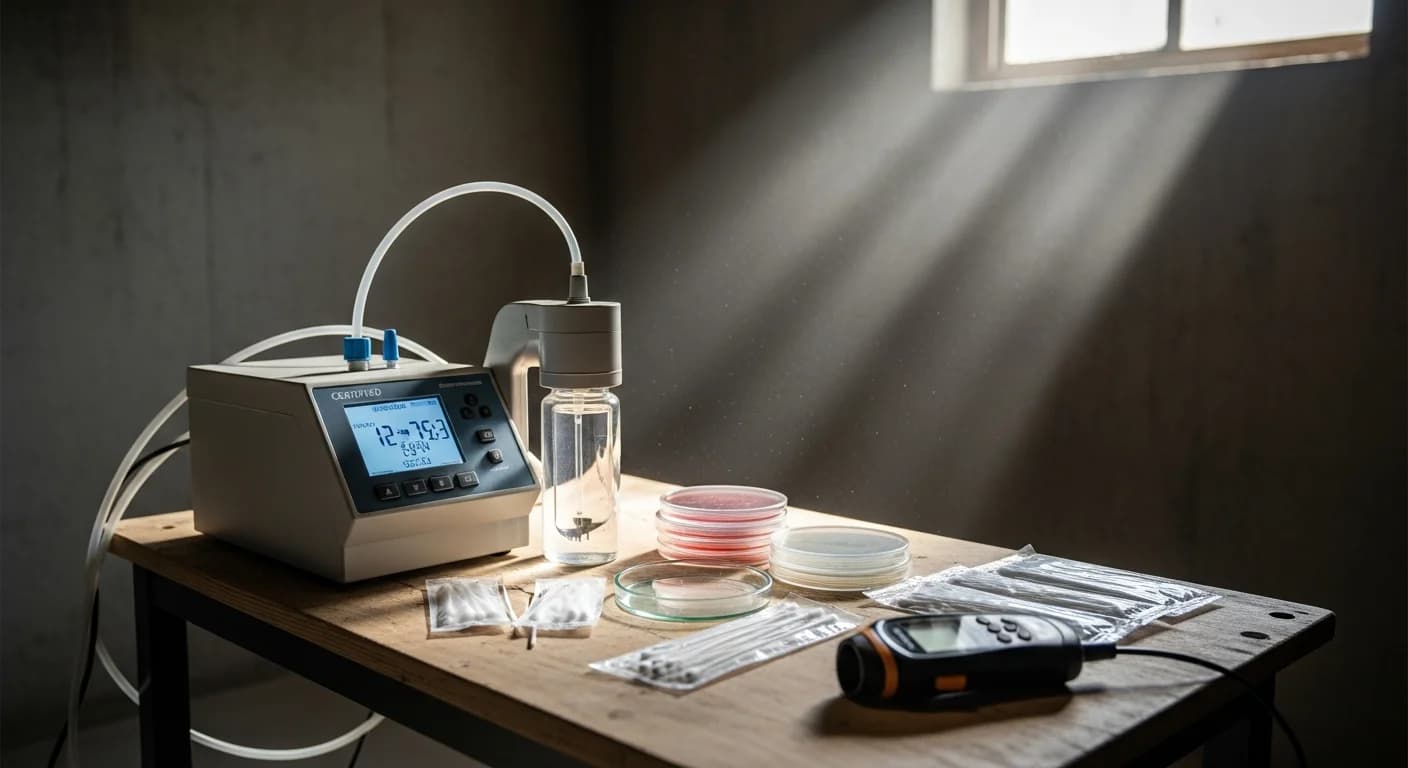
TDC Clean & Dry collects air samples, surface samples and wall cavity samples based on what our inspection finds, and each sample goes to a certified lab for analysis. The results show which mold types are present, where they are concentrated and how far they may have spread.
Stanwood sits in Snohomish County, where the Pacific Northwest climate brings extended rainfall, cool winters and high indoor humidity. Those conditions push moisture into crawl spaces, attics and wall cavities, which makes hidden mold growth common in local homes.
Testing gives you a clear picture before any removal work begins, and it confirms whether indoor air is back to normal after remediation is complete. If you smell something musty, see discoloration or recently had water damage, call TDC Clean & Dry to schedule mold testing.
Our process
How Mold Testing Works
Sampling is planned around the question you need answered, and every result is read against the air outside.
Decide what to sample
Every test starts with a question: is there hidden growth, how far has it spread, or did the cleanup work? The inspection findings decide which rooms, surfaces and wall cavities get sampled.
Take an outdoor baseline
An air sample is collected outdoors as a reference point. Outdoor air always contains some mold spores, so indoor results are compared with this baseline rather than with a fixed number.
Sample the air and surfaces inside
A calibrated pump draws a measured volume of indoor air through a sample cassette in each room of concern. Tape lifts or swabs are taken from suspect growth, and wall cavity samples are drawn through a small hole.
Send the samples to the lab
Samples are sealed, labeled and sent to an outside lab for analysis. The lab identifies the mold types present and counts the spores in each air sample, giving a result for every location tested.
Walk through the results
We explain what the lab found — which molds are present, where indoor levels are elevated compared with outdoors, and what that means for the scope of work. After remediation, the same method is used for clearance.
When to test
When Mold Testing Makes Sense
Testing answers specific questions — here is when it earns its place, and when it does not.
You smell it but cannot see it
A persistent musty odor with no visible growth is the classic case for testing. Air and wall cavity samples show whether spores are elevated indoors and can point to the room where growth is hiding.
After a leak or flood
Materials that stayed wet for more than a day or two can grow mold out of sight. Sampling shows whether growth has started inside walls or under flooring before repairs close them up.
After remediation
Clearance sampling compares indoor air in the cleaned area with the outdoor baseline. It gives you — and a buyer, landlord or insurer — lab-backed documentation that the work did what it was supposed to.
When growth is already visible
If you can see the mold and know where the moisture comes from, testing often adds little — the growth has to come out either way. In that case, an inspection is the better first step.
Mold testing FAQ
Mold Testing Questions, Answered
Common questions about mold testing in Stanwood, WA.
How do I know if I need mold testing or mold removal in Stanwood?
Testing comes first when you are unsure whether mold is present or how far it has spread. A musty odor, recent water damage or unexplained respiratory irritation are common reasons to test before any removal work starts.
What does a mold test from TDC Clean & Dry actually include?
It includes a physical inspection plus air and surface sampling sent to a certified lab. The results show which mold types are present and whether indoor spore levels are elevated compared with an outdoor baseline reading.
Can mold be hiding in my Stanwood home even if I cannot see it?
Yes. Mold often grows inside wall cavities, under flooring and in crawl spaces, out of sight. Air sampling and wall cavity sampling are among the most reliable ways to detect hidden growth.
Do I need mold testing after a water leak or flood in my Stanwood home?
Testing after water damage is a practical way to confirm whether mold has started growing in the affected areas. In a wet climate like Stanwood's, moisture can linger in walls and subfloors longer than homeowners expect, raising the risk of hidden growth.
Is mold testing required before selling or buying a home in Stanwood?
Mold testing is not legally required for most home sales, but it gives buyers and sellers documented evidence of indoor conditions. A written lab report can support negotiations and help both parties make an informed decision.
How do I know when mold removal is finished and the air is safe in my Stanwood home?
Post-remediation air sampling shows whether indoor spore levels have returned to normal. There is no federal limit for mold spores, so results are compared with an outdoor baseline. TDC Clean & Dry provides this clearance testing, so you have lab-backed documentation that the work is complete.
Answers, not guesses.
Lab results turn a musty smell or a stained wall into facts: which molds are present, how indoor levels compare with the air outside and whether a cleanup did its job. That is what you need to decide what comes next.
Testing works best alongside mold inspection, mold removal and mold remediation — and we handle all three.